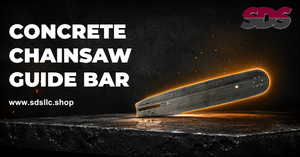
Concrete cutting does not allow for any mistakes. The weakest link in your system affects speed, precision, and profitability. While most users concentrate on the chain or the saw, the truth is that the Concrete Chainsaw Guide Bar controls the cut itself from the moment of its beginning to the moment of its end. Inconsistent results, inefficient cutting, and slow productivity come from old or incorrect guide bars. The guide below reveals the purpose of a guide bar, its importance, and the ways to pick the right one for your crew. The parts below are delivered by SDS LLC daily, and their failures and successes give us patterns.
What a Guide Bar Actually Does
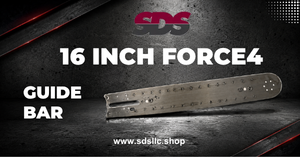
The guide bar is the steel track along which the diamond chain is run inside the cutting head. The guide bar takes care of lateral pressures, chain alignment, and dissipation of heat created during cutting. Inadequate guide bar construction means flexibility, resulting in a skewed cutting path, chain wear, and frequent stops to adjust the chain tension. On concrete – a tough material – guide bar stiffness is not an option but a must-have.
Symptoms That Your Guide Bar Needs Replacement
Often the chain is replaced by operators before checking the guide bar. This is wrong. symptoms to be aware of:
- Inequalities in the grooves of the guide bar rails that lead to skewed chain position
- Bending and warping of the guide bar after extensive use
- Premature overheating despite sufficient water cooling
- Chains becoming too slack to maintain proper adjustment no matter how many times you try
In such cases, the guide bar—and not the chain—is likely the source of the problem. If the chain is replaced without taking care of the guide bar, you will simply shorten the life of the chain.
Bar Selection According to Saw Type
Bars are not universal. The length, amount, and pitch need to be compatible with the saw you have—whether gas, hydraulic, electric, or pneumatic. Bars designed for the hydraulic saw will not function in the same way in the gas one, regardless of similar measurements that appear on paper. The mismatched parts will stress the drive sprocket and reduce the lifespan of all subsequent components. When ordering, ensure the type of saw, the required length of the bar depending on the depth of the cut, and the chain pitch are accurate. This mistake is the most frequent – and the most costly – in concrete cutting.
The Importance of Building in Cost Per Cut
Cheap bars will be indistinguishable from good ones when viewed in a product photo. The difference becomes noticeable after a few dozen cuts. Good bars feature hardened steel rails, which don’t develop grooves, and exact tip geometry to provide proper chain tracking. This helps reduce friction, resulting in lower heat generation, less chain wear, and fewer replacement cycles. The only way to make an informed comparison is by calculating cost per cut and not only the purchase price. The bar that initially appears expensive but lasts three times longer, is the cheaper one.
Working With a Supplier Who Is Experienced in the Field
Blindly ordering off the web page will likely result in misordering and increased freight expenses. Since 2012, SDS LLC has been supplying diamond concrete chainsaw guide bars, chain, and sprockets to contractors throughout North America, and it’s not only the product range that is valuable but also the supplier’s knowledge of what bar goes to which saw and what build withstands daily commercial use compared to occasional work.
Final Word
Cutting accuracy depends only on how accurate the guide bar used in cutting is. Cutting corners in order to reduce costs almost inevitably leads to losses due to the frequent wear of the chain and downtime. The Guide Bar should be regarded as basic equipment.