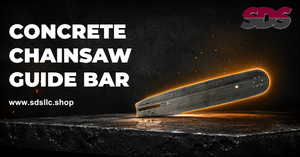
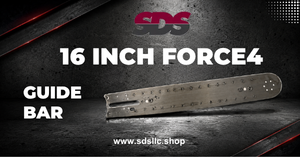
Cutting concrete requires machinery designed to withstand high pressure, heat, and friction. The 16 Inch Force4 Guide Bar has been manufactured for precisely this purpose and provides contractors with a reliable tool for mid-size cutting. No matter if you are working on reinforced concrete, block, or stone, the choice of the guide bar determines how efficiently, smoothly, and safely you can perform your cutting operation. In this article, we will analyze the key points that make this particular guide bar a worthy option, its role in your machinery and the importance of choosing good equipment.
The Problem With Choosing the Wrong Guide Bar
Contractors tend to pay too much attention to the chains while disregarding the guide bar completely. This is a huge mistake. An improperly sized or designed guide bar leads to uneven wear of the chains, decreased efficiency of cutting operations, and increased downtime for maintenance. Bars that are too small will struggle with depth on thick slabs, while bars that are too large will put unnecessary strain on the engine of your saw.
Why Is the 16 Inch Guide Bar Size Appropriate?
The 16-inch guide bar strikes an ideal balance. This is because it is sufficiently long to accommodate average slab thickness and mid-level renovation and masonry projects, but not too long that it cannot be maneuvered easily, unlike 20-inch or 30-inch bars that become difficult to control in tight spots. The 16-inch guide bar size allows workers engaged in driveways, sidewalks, foundations, or utility cuts to cover most of the projects without changing between different bar sizes.
Durability Through Constant Usage
In concrete cutting, considerable amounts of heat and abrasions are created. As a result, the construction of the guide bar becomes a very important feature. The guide bar should have a toughened rail to withstand bending, constant groove tolerances for accurate tracking, and sufficient lubrication. Poor tracking causes premature wear of chains and the possibility of kickback.
Compatibility as Important as Size
Guide bars aren’t one-size-fits-all tools. The mounting pattern, chain pitch, and type of saw (gas, hydraulic, electric, or pneumatic) must all be considered to determine compatibility. It’s important to make sure your bar specifications precisely match those of your saw before making a purchase, since incompatible bars won’t get the job done until they’re available.
Matching Chains with Guide Bars
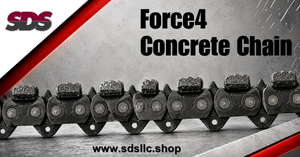
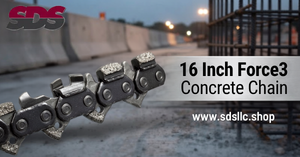
The efficiency of a guide bar is dictated by the chain it operates with. Using an incompatible chain with a 16-inch guide bar leads to wear in both the chain and bar. Using Force4 chains together with Force4 bar systems helps keep consistency of tension, tracking, and cutting efficiency between all of your tools.
Where to Buy the Right Guide Bars
All suppliers do not maintain the same level of manufacturing quality, and this difference becomes immediately clear once you experience broken rails, bad tracking, and lack of chain tension on-site. SDS LLC provides diamond concrete cutting chains, bars, and sprockets that are specifically manufactured with contractors in mind, with the goal of never failing halfway through the project. Cooperating with a supplier that understands the connection between chains and bars and does not treat them as different components will help you get the most out of your equipment.
When your team evaluates guide bars before starting their concrete work, it will save you time and effort if you consider all factors, including the right bar length, chain type, and compatibility with saws, beforehand. When comparing different sizes, the 16 Inch Force4 Guide Bar is among the most useful ones for a contractor.